Concrete patios in Summerville — graded, jointed and counted against lot coverage
A patio off a screened porch is the most-wanted thing in a Summerville back yard, and the easiest thing to build wrong: too close to the house, too flat, no base, and over the lot-coverage line. We measure the coverage first, then build it to last.
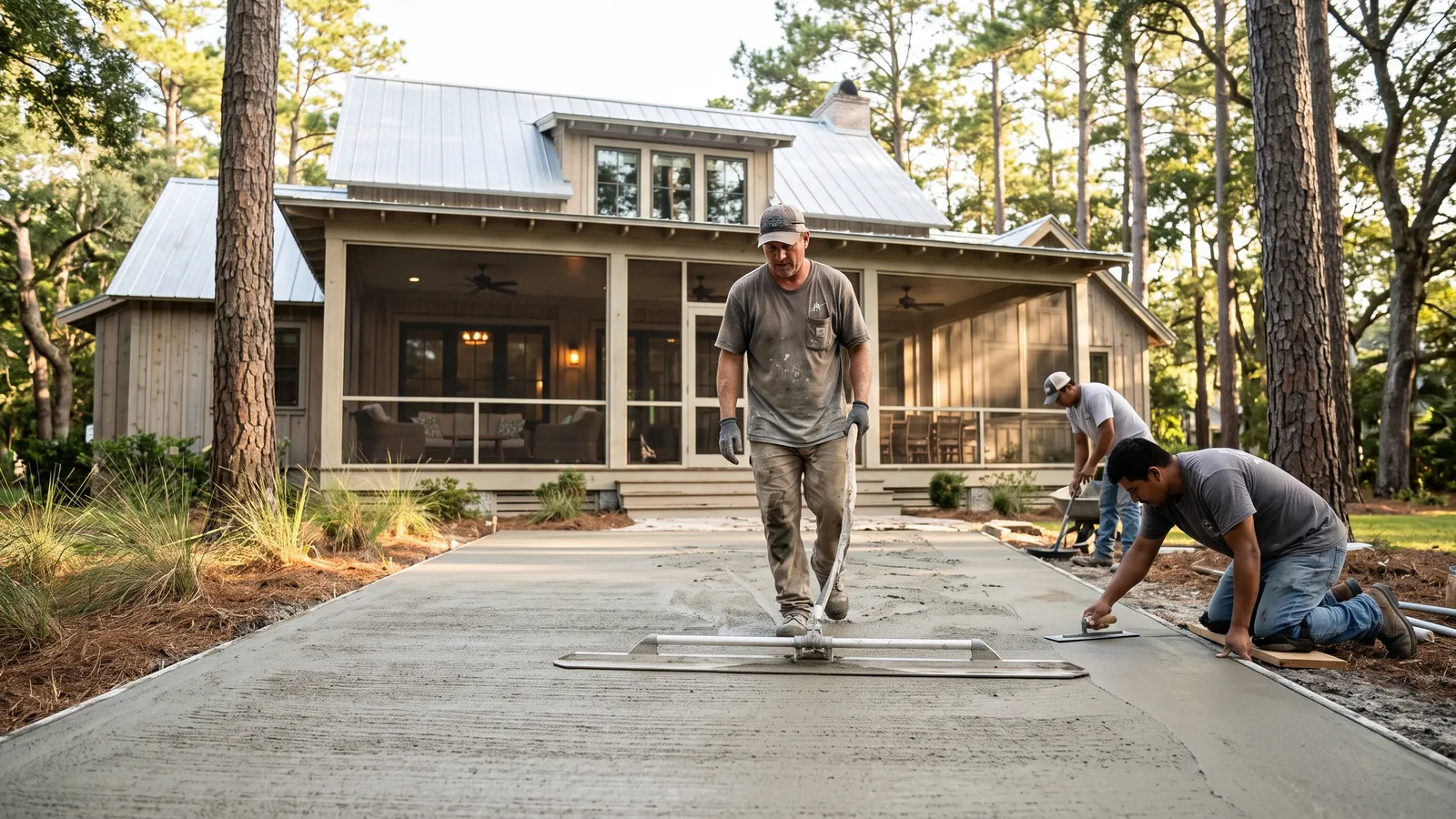
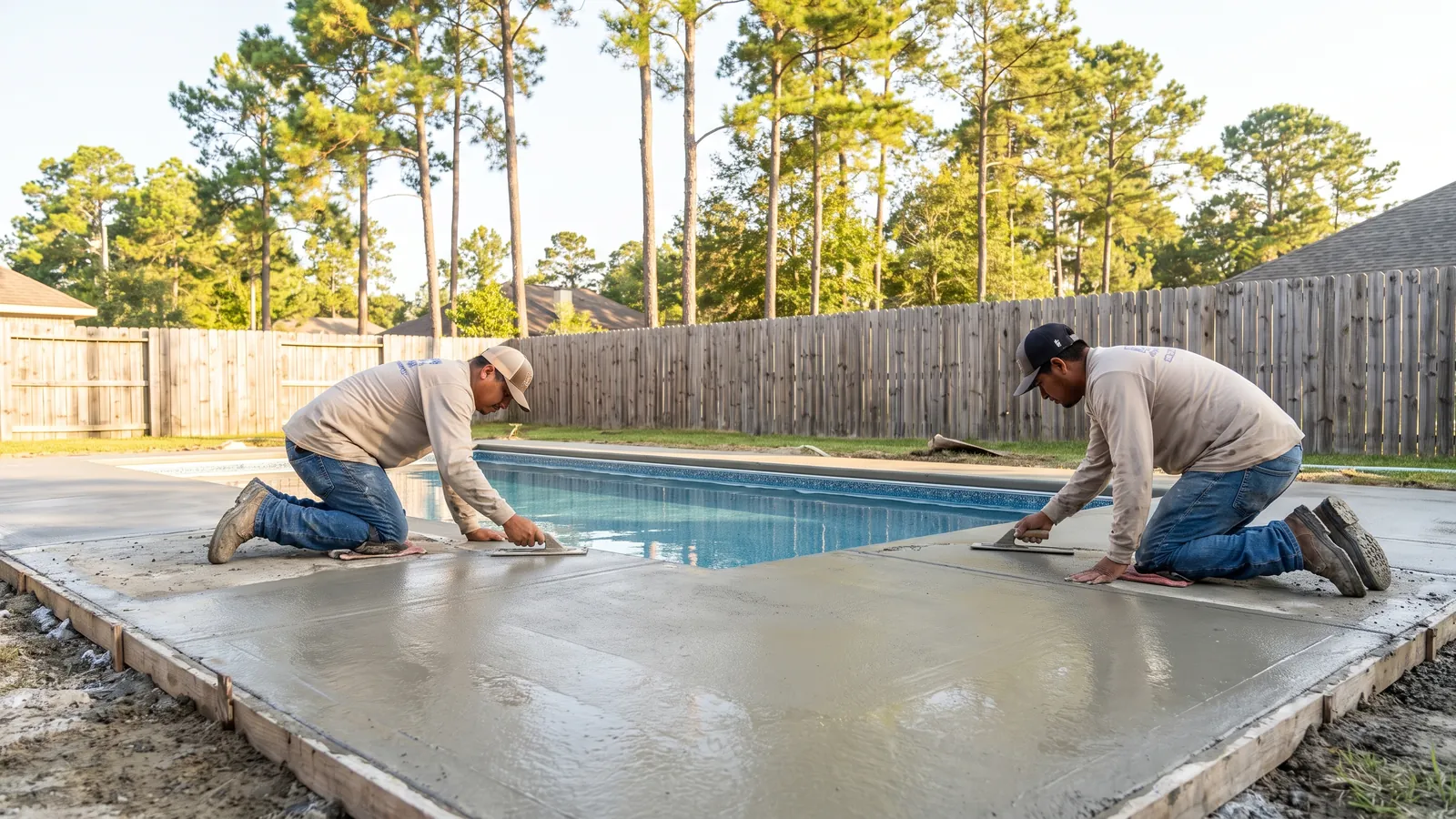
Summerville back yards want a patio: a slab off the screened porch for the grill, a pad for the fire pit under the pines, a place for the table through the long outdoor season. Built right, a concrete patio is the cheapest hard surface you can put in and the longest-lasting — broom-finished, or with a smooth troweled border, or stamped in a pattern — and it outlasts pavers on the Lowcountry's settling ground because it moves as one piece instead of a thousand. Built wrong, it's a cracked slab that slopes toward the house and sends the rain into the crawlspace. The difference is a quarter-inch-per-foot grade away from the foundation, four inches of concrete on a compacted base (more stone on the wet soils), reinforcement for the clay, control joints at the right spacing so the summer cracks happen where we planned them, and an expansion joint at the house.
Before any of that, the paperwork. The Town's zoning counts every paved surface toward impervious lot coverage — 30 percent in GR-2 and GR-3, 35 percent in GR-5 — and a house, a driveway and a big patio on a quarter-acre lot can be over the line before the first form goes in. We run that math first; where the number doesn't work, a section of pervious concrete is excluded from the count and solves it. The Town's plot plan has to show the proposed patio and any easements, and nothing can go in a drainage or utility easement — the Town says 'structures,' Dorchester County says 'driveways and fences,' and Summerville CPW's sewer easement is ten feet each side of the pipe. In the historic district the Board of Architectural Review approves exterior work first. And the HOAs at Nexton, Cane Bay, Summers Corner and The Ponds want a drawing. We handle all of it and the patio gets built once.
What's included
Lot-coverage check
The 30 or 35 percent impervious math run before we quote; pervious sections where it doesn't fit.
Easement check
The plat read for drainage, utility and CPW sewer easements; the patio placed where it's allowed.
Graded away from the house
A quarter inch per foot off the foundation, with an expansion joint at the wall.
Base and steel
Compacted stone on the wet soils, four inches of concrete, wire or rebar on chairs for the clay.
Finish you choose
Broom, smooth border, exposed aggregate or stamped and colored.
Jointed for the heat
Control joints at the right spacing, cut the same day, so August's cracks happen in the lines.
Concrete patios cost in Summerville, SC
| Job | Typical price | Notes |
|---|---|---|
| Broom-finish patio, reinforced | $7 – $12 per sq ft | 12×16 ≈ $1,400–$2,300 |
| Smooth-trowel border upgrade | + $1 – $2 per sq ft | Clean edge, same slab |
| Exposed aggregate | $10 – $15 per sq ft | Oyster-shell or pea-gravel look |
| Stamped and colored patio | $10 – $17 per sq ft | See stamped |
| Pervious patio section | $12 – $18 per sq ft | Excluded from lot coverage |
| Fire-pit pad, 10×10 | $900 – $1,600 | Thickened under the pit |
| Steps from the porch | $250 – $600 per step | Poured with the slab |
These are 2026 Summerville-area ranges so you can budget. Your written price is itemized — removal, base, thickness, reinforcement, finish, joints, the permit and its inspections — and good for 30 days.
Recent work
Questions we get about concrete patios
How close to the house can the patio be?
Right up to it, with an expansion joint at the wall and the slab sloped away at a quarter inch per foot. The problem patios are the ones poured flat or sloped toward the crawlspace.
Will it count against my lot coverage?
Yes — the Town counts all paved surfaces. If the house and driveway already use most of the 30 percent, we can pour part or all of the patio as pervious concrete, which the ordinance excludes from the count.
Concrete or pavers?
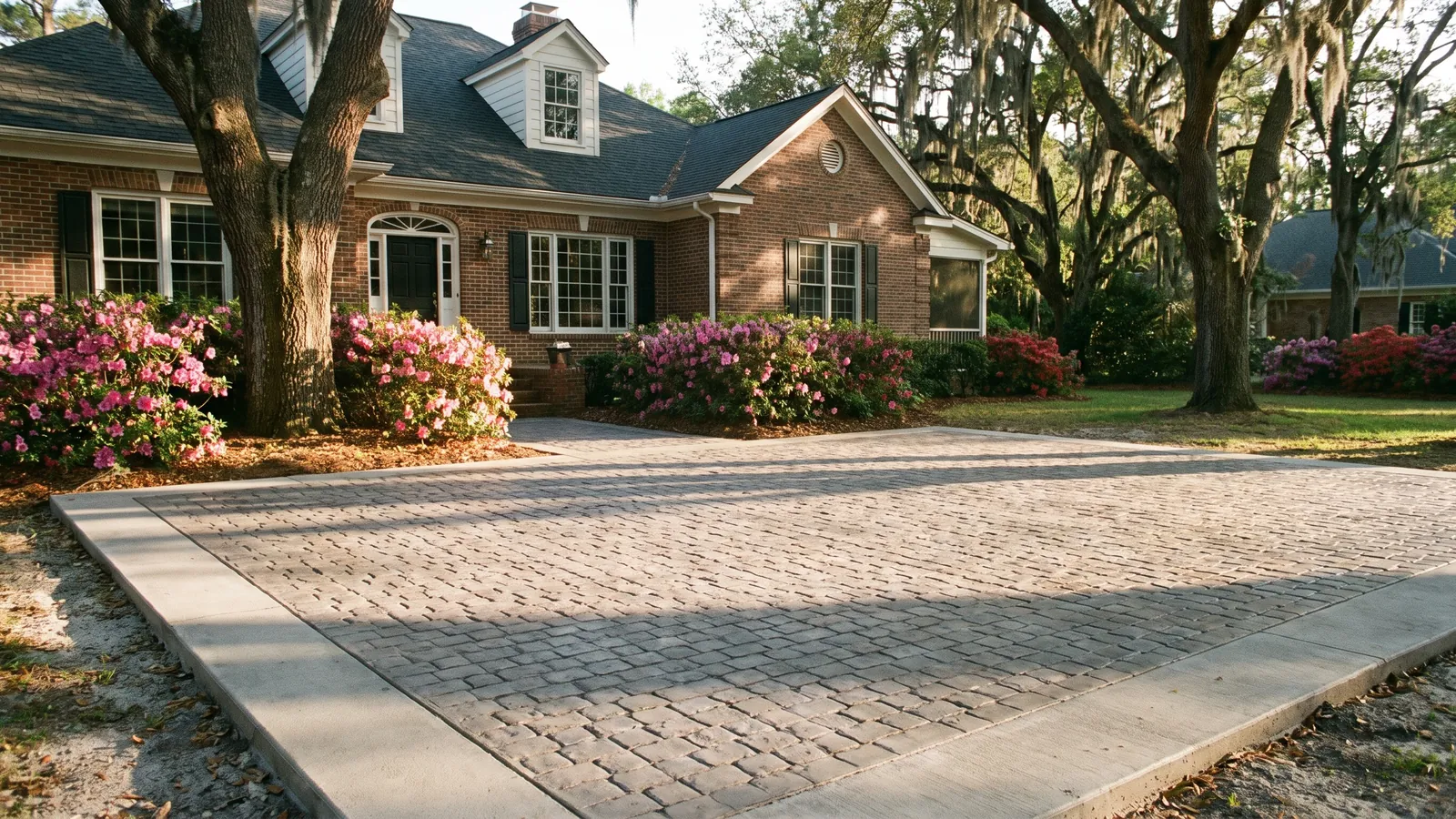
On the Lowcountry's settling soils, a reinforced concrete slab moves as one piece and stays level longer; pavers settle individually and grow weeds in the joints. Pavers win on looks and on repairability. Stamped concrete splits the difference.
Do I need a permit for a patio?
A patio at grade usually doesn't need a building permit in itself, but it does have to meet the coverage cap and stay out of easements, and in the historic district the BAR approves it. The Town's published exemptions aren't specific, so we ask the Building Department for your address before we pour.
Why did my old patio crack?
No base, no steel, no joints, poured flat — or the clay under half of it swelled and the other half sat on fill. We'll look at it and tell you whether it's a leveling job or a replacement.