Pervious concrete in Summerville — the paving the lot-coverage cap doesn't count
Summerville caps impervious coverage at 30 percent in its main residential districts and counts every paved surface. Pervious concrete is excluded. That one line in the ordinance is why we pour it, and why your extra parking pad or patio can get permitted.
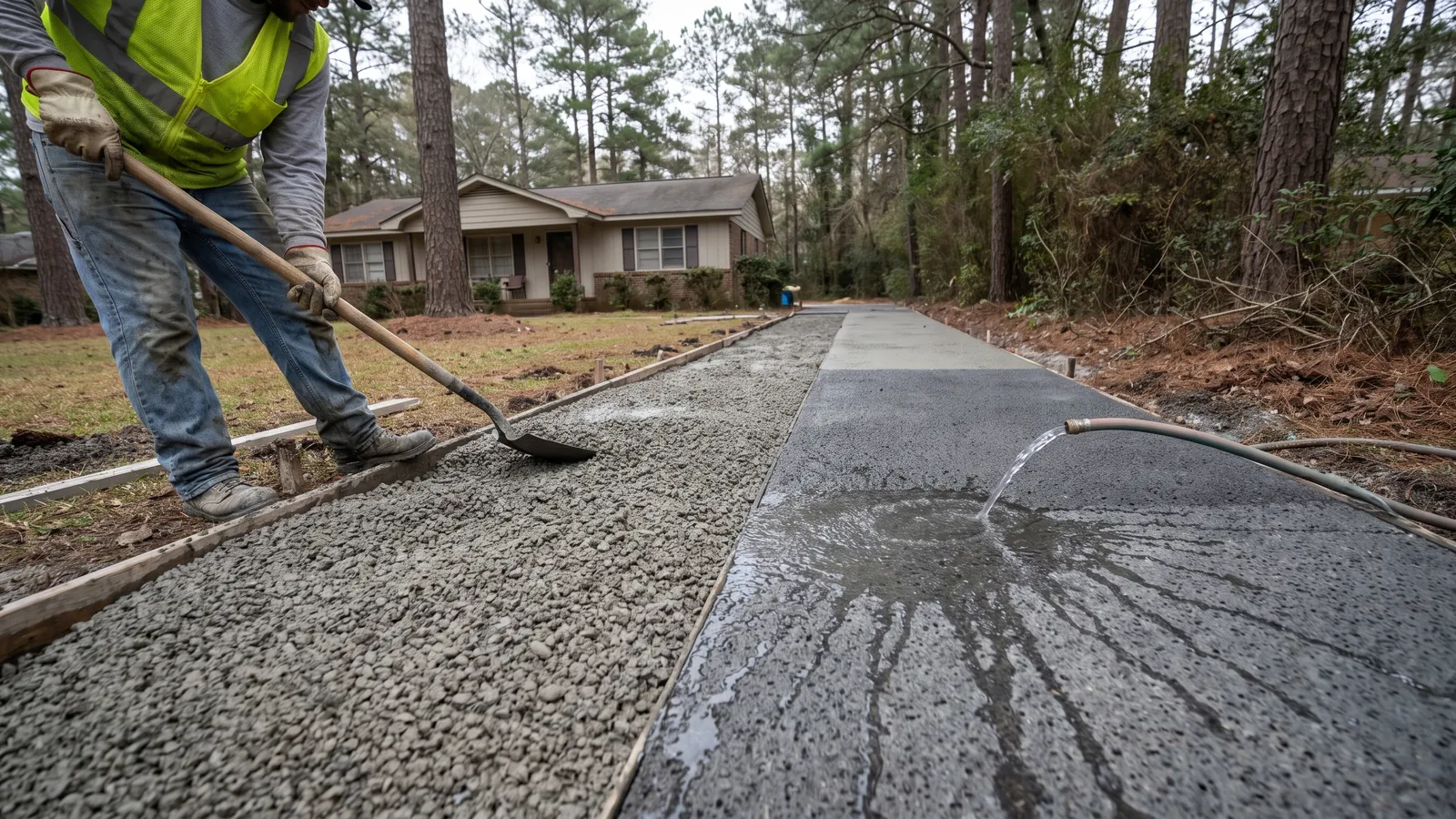
The Town of Summerville's Unified Development Ordinance says that impervious areas 'shall include all paved surfaces and building areas under roof,' caps them at 30 percent of the lot in GR-2 and GR-3 (the main single-family districts, with GR-2's 20,000-square-foot minimum lots), 35 percent in GR-5 and 50 percent in the neighborhood-residential districts — and then excludes pervious pavement from the impervious count. On a quarter-acre lot, 30 percent is about 3,270 square feet; a 2,400-square-foot house footprint and a 24-by-40 driveway are already 3,360. That's the homeowner who calls us wanting a patio, a golf-cart pad, a second parking strip or a wider driveway and has been told no. Pervious concrete is the yes: an open-graded mix — coarse aggregate, cement paste, almost no sand — that sets up with 15 to 25 percent voids and lets rain pass straight through to a stone reservoir underneath and into the ground, at rates far beyond any storm the Lowcountry throws at it. The ordinance doesn't count it. The Town's own plot-plan checklist asks for pervious and impervious percentages, so the math goes on the drawing and the permit gets issued.
It's also simply a good idea on this ground. The Rains, Coxville and Lynchburg soils hold water a foot down in winter, Carolina bays and backyard low spots pond after every big rain, and a slab that sheds water onto them makes it worse; a pervious section drains the same water into a stone bed under itself. We build it on six to twelve inches of clean, open stone over fabric (sized for the soil's infiltration rate — the wet soils need a deeper reservoir), pour the open-graded mix, screed and roll it rather than trowel it (troweling closes the surface), and cure it under plastic for a week, because pervious concrete dries out fast and a dry cure is a weak one. It's not for the whole driveway — the surface is coarser, it needs a vacuum or a pressure-wash every year or two to keep the voids open, and it's not the place for a stamped pattern — but as a parking strip, a cart pad, a walk, a patio section or the back half of a driveway, it's the piece that makes the project legal. Pervious also earns credit under the Town's and counties' stormwater rules for larger projects, and the HOAs at Nexton and Cane Bay have approved it as a driveway-strip material.
What's included
Coverage math on the drawing
Impervious and pervious percentages calculated and shown on the Town's plot plan, so the permit goes through.
Open-graded mix
Coarse aggregate and paste, 15–25 percent voids, no sand — rain passes through, not off.
Stone reservoir for the soil
Six to twelve inches of clean open stone over fabric, deeper on the slow-draining Rains and Coxville soils.
Rolled, not troweled
Screeded and compacted with a roller so the surface stays open; a troweled pervious slab is a sealed one.
Cured under plastic
Seven days covered — pervious concrete that dries early loses strength.
Maintenance plan
Vacuum or pressure-wash every year or two to keep the voids clear of pine straw and pollen.
Pervious concrete cost in Summerville, SC
| Job | Typical price | Notes |
|---|---|---|
| Pervious driveway strip, parking pad or walk | $12 – $18 per sq ft | Includes the stone reservoir |
| Pervious patio section | $12 – $18 per sq ft | Paired with a standard or stamped section |
| Golf-cart or second-car pad, 10×20 | $2,400 – $3,600 | Excluded from coverage |
| Deeper reservoir on wet soils | + $1.50 – $3 per sq ft | Rains, Coxville, Lynchburg |
| Coverage calculation and plot-plan drawing | Included | For the Town or county permit |
| Annual cleaning | $150 – $350 | Vacuum or pressure-wash |
These are 2026 Summerville-area ranges so you can budget. Your written price is itemized — removal, base, thickness, reinforcement, finish, joints, the permit and its inspections — and good for 30 days.
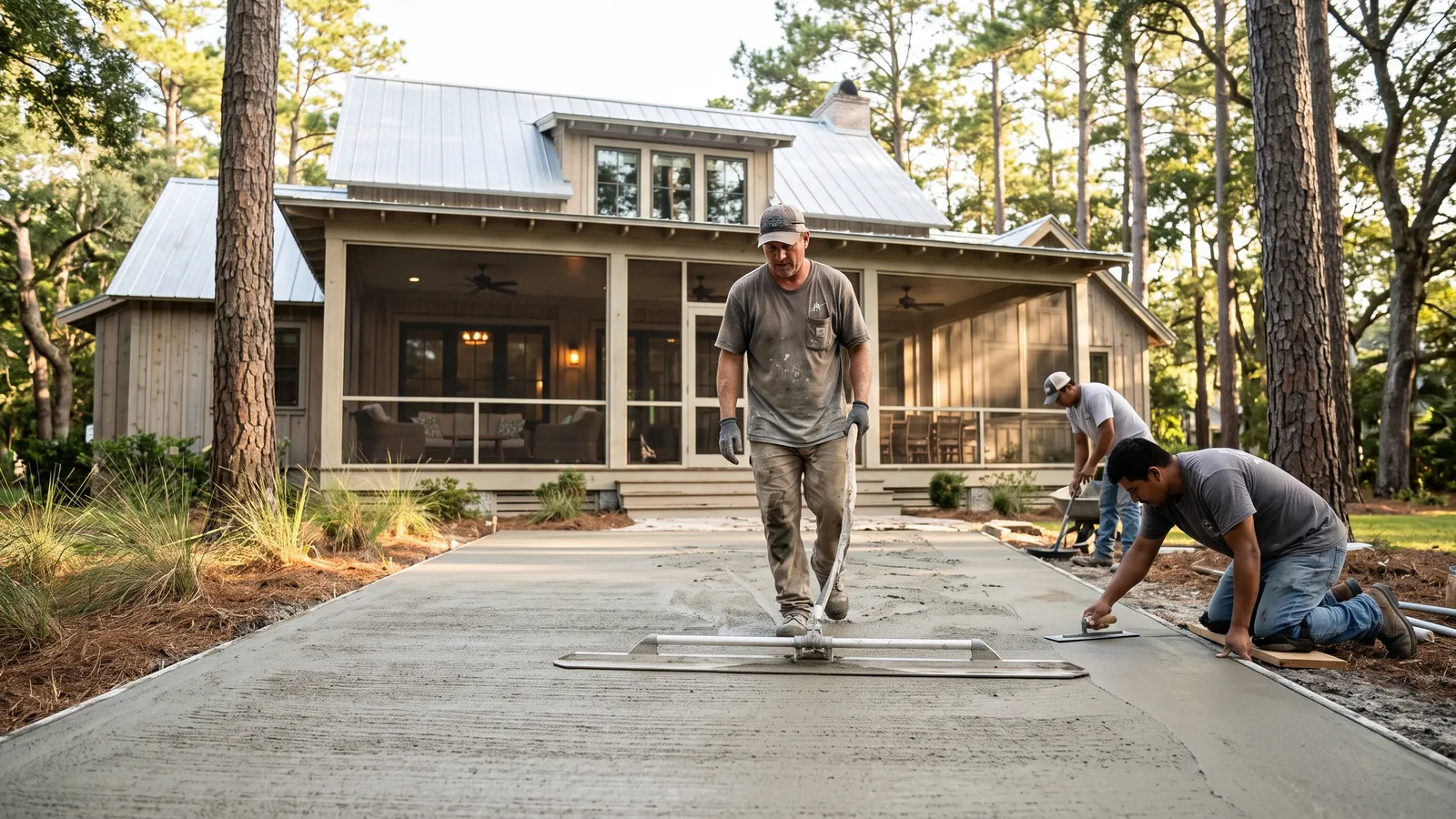
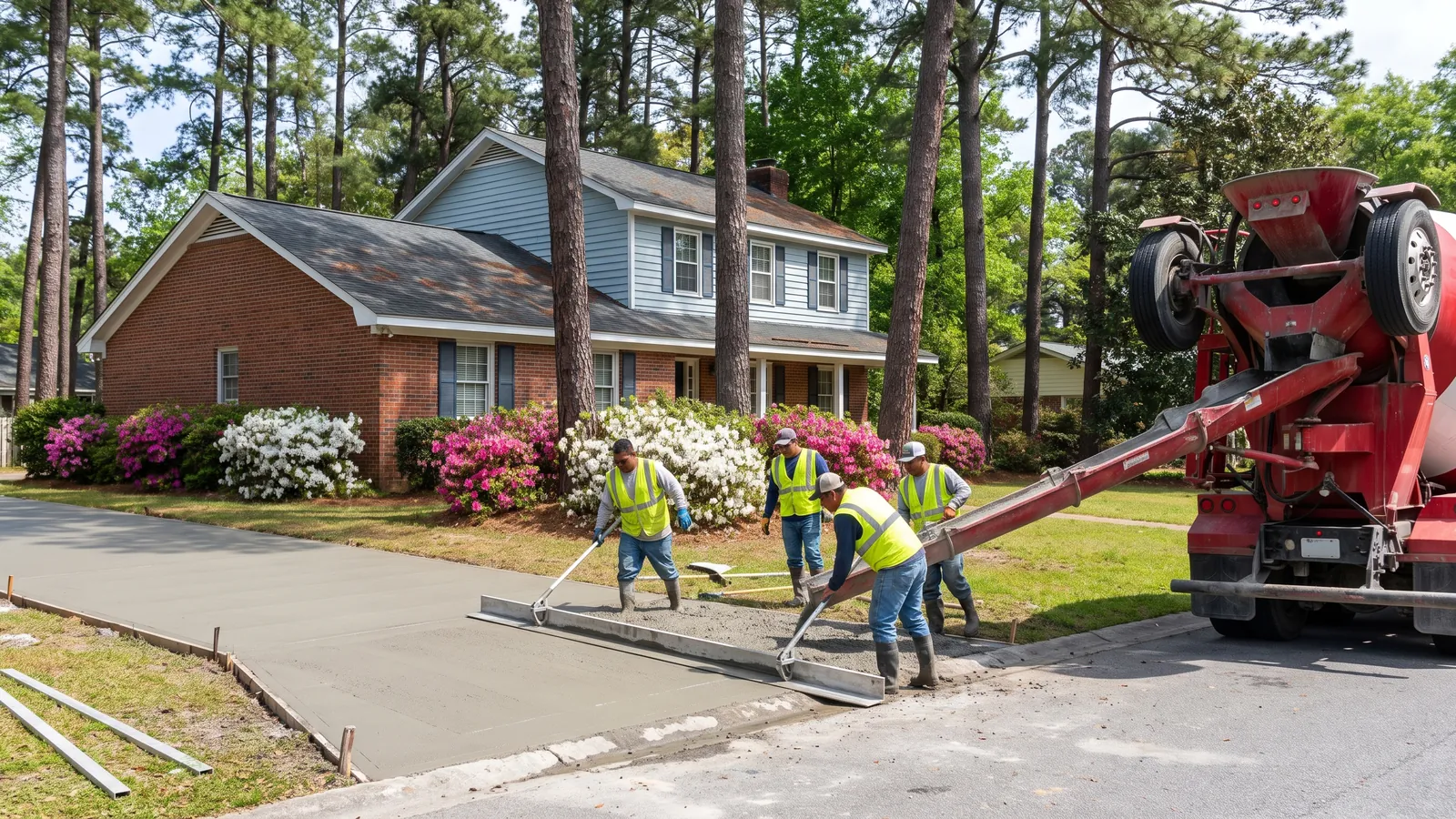
Recent work
Questions we get about pervious concrete
Does the Town really not count it?
The UDO excludes pervious pavement from impervious coverage, and the plot-plan checklist asks for both percentages. It has to be true pervious concrete on a stone reservoir, built and documented as such — not a standard slab called pervious. We draw it and the Town reviews it.
Does it hold up to cars?
Yes, for residential driveways, pads and parking strips. It's a different texture — coarser, like a rice cake — and it isn't for heavy trucks or a stamped look. The strength comes from the paste bonding the aggregate; curing it right matters more than with regular concrete.
What about the water table?
The reservoir still drains, just slower, into soils that are already wet in winter. On the slow soils we deepen the stone bed and sometimes add an underdrain to daylight. It still beats a slab that sheds every drop onto the lawn.
Will it clog?
Pine straw, pollen and sand will close the surface over time. A vacuum or pressure-wash every year or two keeps it draining; we put you on a schedule.
Can I mix pervious and regular concrete?
That's the usual design: a standard or stamped slab where you want the finish, and a pervious strip, pad or back section to keep the total under the cap. They're jointed where they meet.